


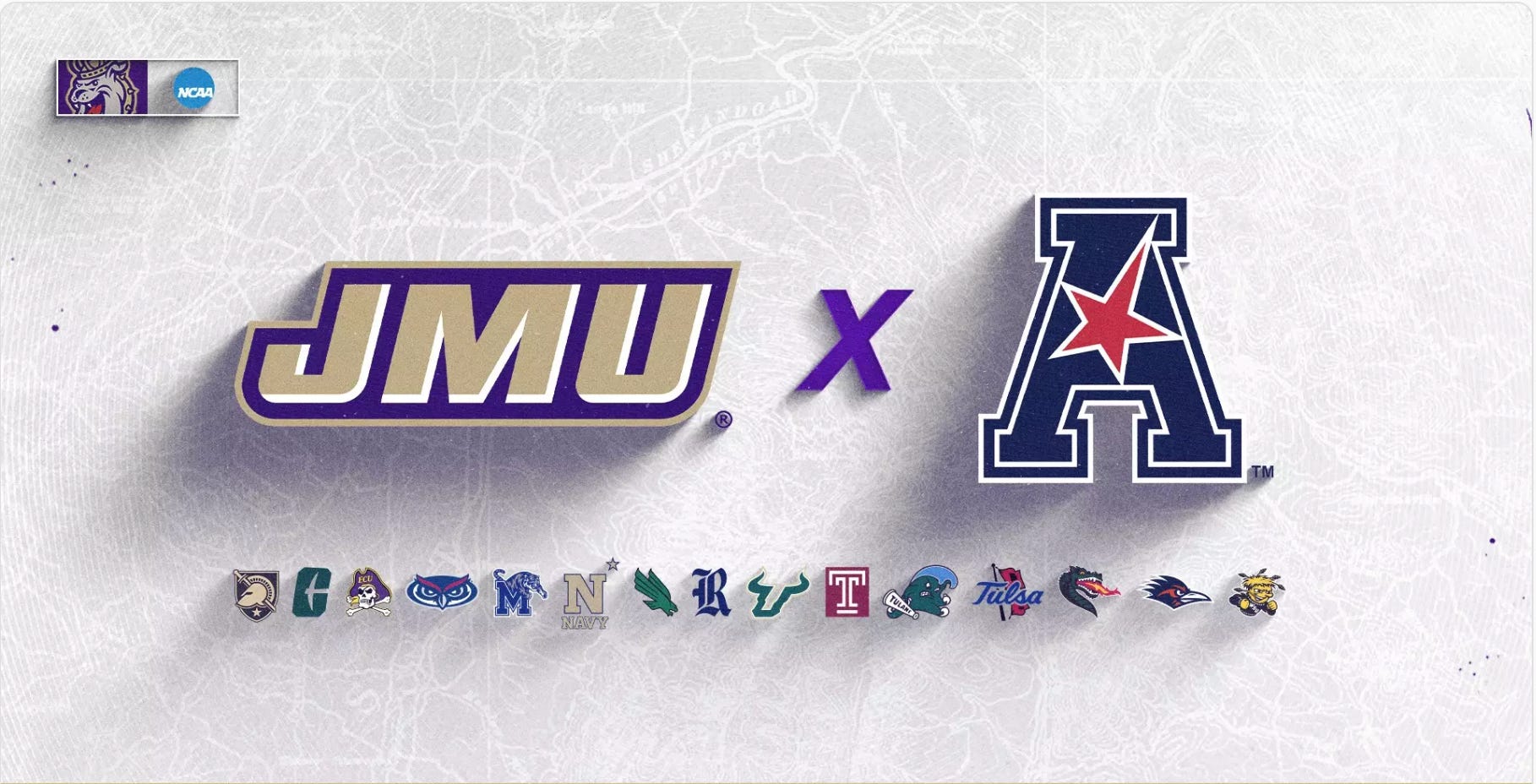
James Madison University will join the American by at least the summer of 2028. The realistic scenario is that by 2027 we see the new league with them included.
The evaluation considered six primary areas: institutional and academic alignment; competitive strength and trajectory; institutional investment; financial sustainability and member value; brand, media value, fan engagement, and geography and operational fit. The conference used multiple sources of analysis, including a quantitative media-value study examining market characteristics, audience performance, fan engagement, competitive performance and other value drivers.
Brett McMurphy reported previously that Miami Ohio and UCONN were interested in joining the league as well. The reactions to that ranged from labeling it as self-aggrandizement (“these discussions happen all the time and the American just leaked it to make itself look better”) to being real (“where there is smoke there is fire”).
It is no-doubt a clear marker for the league as one of the premier G6 leagues. Whereas the Pac-12 has made moves to position themselves as one the upper tiers, recruiting Texas State from the Sun Belt last year and adding various Mountain West programs, the American has now poached the Sun Belt’s premier program. JMU is fresh off a college football playoff appearance and boasts both Cignetti and Chesney as coaching alumni. Curt Cignetti went on to win the national championship with Indiana, with more than a few JMU guys. Bob Chesney has currently has UCLA winning with former JMU players.
The kind of program that can load and reload is valuable, as this is the modern college football landscape.
What does it mean for the future?
Memphis, USF, and Tulane are seemingly perpetually unhappy and on the constant lookout for new conference alignments. Memphis practically begged to join the Big 12 in recent years, awhile USF fans make eyes at the ACC anytime they can.
Congress is still mulling over the details of the Protect College Sports Act, and the College Football Playoff is expanding to 24-teams, no one knows where the best alignment is. Some analysts have said the era of conferences is over, and that the “best”, name-brand teams will go independent. Notre Dame is famously independent, and their national brand carries them to a sweetheart playoff possibility every year.
In the 1970s and 1980s it was more common for independent programs to schedule freely. The rise of conference affiliation came when the SEC was able to expand, secure a lucrative conference title game and media contract. To keep up, conferences expanded. The Big 8 became the Big 12, killing the old Southwest Conference. Expanded television deals and jealously eventually led to moves like Nebraska to the Big 10, and Colorado the Pac-12. This decade has seen the extreme version of that, with UCLA and USC joining the Big 10, to be in a league with Rutgers.
An expanded playoff should lead to something like a reasonable league affiliation situation.
Is there a good reason for 15-teams in the American? Does JMU fit with Rice and Tulsa and North Texas? The answer, for now, is “yes”. All of these programs share similar levels of commitment to the sports — something like a minimum $10 million dollar football spend — and lack of access to the “big time.”
JMU raises the bar in this league. They have consistent investment, a winning culture, a committed fan and donor base in both football and basketball. It should be a very interesting few years in the American.